
Prepared 2026-11-10
An accounts payable workflow is the set of steps used to receive, review, approve, pay and document vendor invoices. A clear workflow helps a business know what is waiting for action, who is responsible at each point and which records support a payment. The exact controls should fit the business’s size, purchasing process and accounting system.
What an accounts payable workflow does
Accounts payable covers money a business owes to vendors for goods or services already received or invoiced. The workflow is the repeatable route an invoice takes before a payment is made. It assigns responsibility, creates a record of decisions and gives the business a way to identify items that are incomplete, awaiting approval or ready for payment.
The central question at every stage is straightforward: does the business have enough information and authorization to move this invoice to the next stage? If the answer is no, the invoice should remain visible as an exception rather than being rushed through the process.
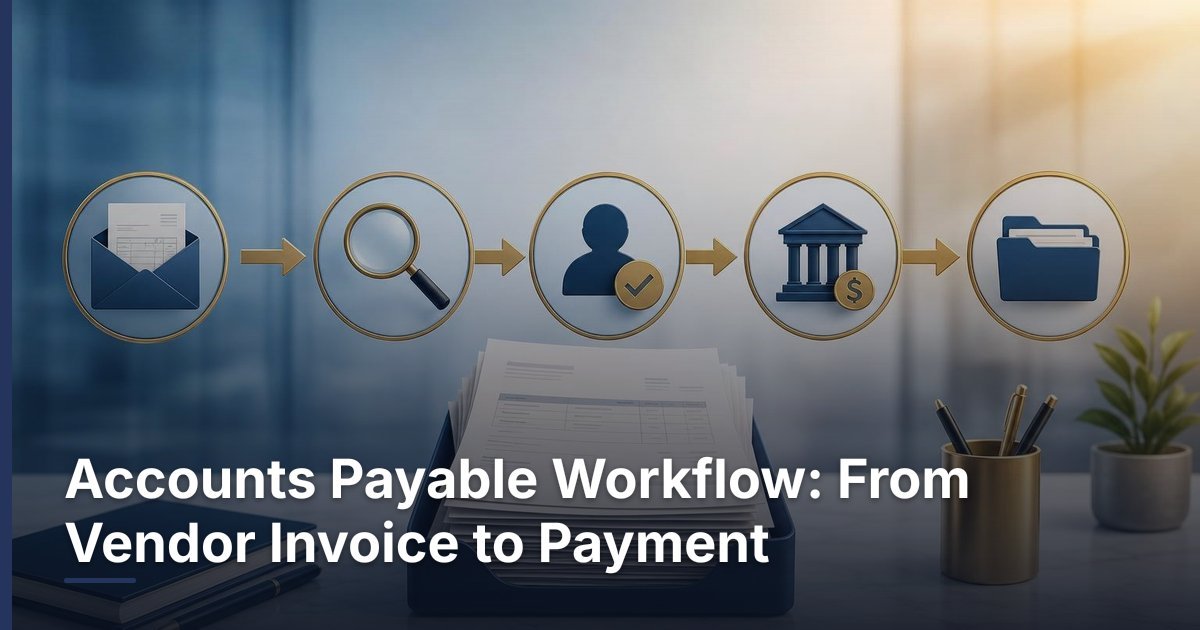
| Stage | Primary purpose | Useful control question |
|---|---|---|
| Receive and log | Create a record of the invoice and supporting documents. | Can the invoice be identified, dated and linked to the correct vendor? |
| Review | Check invoice details against purchase and receiving information where available. | Do the vendor, amount, invoice number and supporting records agree? |
| Approve | Obtain confirmation that the cost is valid and properly authorized. | Has an authorized person confirmed the charge? |
| Schedule and pay | Plan and release payment under the organization’s payment process. | Is the payment due, approved and ready for release? |
| Record and reconcile | Retain payment evidence and match activity to accounting records. | Can the invoice, approval and payment be traced together? |
1. Receive, capture and organize the invoice
The process begins when an invoice arrives. It may be received by email, mail, a vendor portal or another agreed channel. Regardless of its source, establish a consistent intake point and record the invoice promptly. A common record includes the vendor name, invoice number, invoice date, amount, due date, payment terms if shown and any documents that explain the charge.
A single intake process reduces the risk that an invoice is sitting in an individual’s inbox while the finance record shows no action is needed. It also provides a starting point for duplicate checks. An invoice with the same vendor, invoice number and amount as an item already recorded deserves attention before it is routed for payment.
Set a clear status for every item
- Received: the invoice has been captured but has not yet been reviewed.
- In review: details or supporting documents are being checked.
- Awaiting approval: the invoice is ready for an authorized business decision.
- On hold: information is missing, the amount is disputed or another exception needs resolution.
- Approved for payment: required checks and approval are complete.
- Paid and recorded: payment evidence has been retained and the accounting record updated.
2. Review invoice details and supporting records
Review is the fact-checking stage. The reviewer compares the invoice with the records available to the business, which may include a purchase order, contract, order confirmation, receiving record or correspondence. Not every business uses every document, but the underlying objective is the same: confirm what the invoice represents before asking someone to authorize payment.
Useful checks include whether the vendor information is correct, whether the invoice number has already been processed, whether the description and amount match the underlying arrangement, and whether the calculation appears internally consistent. Where a purchase order and proof of receipt are used, comparing those records with the invoice is often called matching. The form of matching should reflect the records the business actually maintains.
- Check that the invoice identifies the intended vendor and contains a usable invoice number.
- Confirm the amount, currency and line descriptions are understandable in the context of the purchase.
- Look for supporting records that show the goods or services were ordered or received, where those records exist.
- Identify missing documents, inconsistencies, duplicates or disputed charges before approval.
- Record the reason for any hold and the person responsible for resolving it.
3. Route the invoice for the right approval
Approval is a business decision, not just an administrative handoff. The approver should have enough context to confirm that the purchase or service was appropriate and that the invoice should be paid. The person who performs the detail review may not be the best person to make that decision, particularly when they did not request or receive the goods or services.
Define approval responsibilities in advance. They can be based on department, vendor relationship, project, type of spend or another internal rule. The important feature is clarity: an invoice should not depend on informal assumptions about who is permitted to approve it. Approval evidence can be recorded within an accounting or workflow system, or retained through another documented internal method.
Avoid approval bottlenecks without weakening the process
Delays often arise when an approver is unavailable, the invoice lacks context or the request is sent to the wrong person. A practical workflow identifies an alternate approver or escalation route, while keeping the same standard for documentation. Escalation should resolve responsibility; it should not erase the need to confirm the charge.
4. Schedule payment and release funds carefully
After approval, the invoice can move to the payment schedule. This stage considers the invoice due date, the organization’s payment calendar and the information needed to make payment. It is also where finance teams can see upcoming obligations rather than discovering them only when they become urgent.
Before payment is released, verify that the payment record still points to the approved invoice and the intended vendor. Changes to vendor payment details deserve a separate, documented verification process appropriate to the business. Do not treat an email instruction alone as automatic confirmation of a change; follow the organization’s own verification procedure and escalation rules.
- Select approved invoices for the payment run or payment schedule.
- Confirm the invoice, approval record and vendor details are connected to the proposed payment.
- Resolve any last-minute hold, dispute or missing-information issue before release.
- Release payment through the business’s authorized method and retain confirmation.
- Update the invoice status so the record shows that payment has been made.
5. Keep an audit trail and reconcile the record
Payment is not the final administrative step. Retain a connected record of the invoice, supporting documents, review notes, approval evidence and payment confirmation. This makes it easier to respond to vendor questions, explain a transaction internally and determine what happened if an issue is identified later.
Reconciliation compares the payment activity with the accounting records and other relevant statements or reports. The purpose is to identify items that have not been recorded as expected, payments that need investigation or invoices whose status no longer matches reality. The exact reconciliation routine depends on the accounting setup, but it should be regular and assigned to a responsible person.
- Keep source documents and notes with the invoice record rather than in separate personal folders.
- Make it possible to trace from invoice to approval to payment confirmation.
- Investigate records that remain open after payment or show payment without a clear invoice link.
- Use recurring reviews to identify repeated exceptions, unclear responsibilities or unnecessary handoffs.
How to handle common exceptions
Exceptions are normal in accounts payable. The risk comes from handling them inconsistently. A documented exception path helps the team pause payment without losing sight of the invoice or creating confusion about the next action.
| Exception | Why it needs attention | Practical next action |
|---|---|---|
| Missing purchase or receiving support | The business may not have enough context to validate the charge. | Place the invoice on hold and request the relevant information from the responsible person. |
| Duplicate or suspected duplicate invoice | Paying the same obligation twice can create avoidable follow-up work. | Compare invoice identifiers and payment history before continuing. |
| Amount or description differs from expectations | The invoice may not match the underlying order, service or agreement. | Ask the vendor or internal requester to clarify the difference and document the outcome. |
| Approval is unavailable or unclear | The invoice may stall or be authorized by the wrong person. | Use the documented escalation or alternate-approval route. |
| Vendor payment details appear to have changed | Incorrect payment instructions can create a payment risk. | Follow the organization’s documented vendor-detail verification process before release. |
A hold should be visible, assigned and explained. Record what is missing, who owns the next action and what must happen before the item can return to the normal flow. This is more useful than an unstructured email chain because it gives the team a workable view of pending obligations.
Building a workflow that fits your business
A workable accounts payable workflow does not need to be complicated. Start by mapping what happens today: where invoices arrive, who checks them, who approves them, how payment is released and where the evidence is saved. Then identify unclear ownership, repeated delays and points where records are incomplete.
Document the desired process in plain language before choosing automation or adding new rules. For smaller organizations, a simple shared intake record and documented approval route may be an appropriate starting point. As volume or complexity grows, more structured workflow tools may help, but the underlying responsibilities and controls still need to be defined.
Financial processes should be tailored to the organization’s accounting practices, internal authorities and risk profile. Consider obtaining advice from an appropriately qualified accounting, financial or legal professional when designing controls, assigning approval authority or addressing payment-security concerns.
If you would like to discuss how a clearer invoice-to-payment process may fit your business needs, contact A&W Financier to discuss your needs.
Frequently asked questions
What are the main steps in an accounts payable workflow?
A typical workflow includes receiving and logging an invoice, reviewing details and supporting records, obtaining appropriate approval, scheduling and releasing payment, then retaining the payment record and reconciling it with accounting records.
Who should approve vendor invoices?
The appropriate approver is the person or role authorized by the business to confirm that the expense is valid and appropriate. Approval responsibilities should be documented so invoices do not rely on informal assumptions.
What should happen if an invoice does not match the purchase or service received?
Put the invoice on hold, document the discrepancy and seek clarification from the responsible internal person or vendor. Resume processing only when the issue is resolved and the record supports payment.
Why separate invoice review from approval?
Review focuses on checking details and supporting records. Approval confirms the business decision to pay. Separating these activities can make responsibilities clearer and creates a more complete record of the decision process.
How can a business reduce duplicate invoice payments?
Record invoices consistently, use vendor and invoice identifiers during review, compare suspected duplicates with payment history, and keep invoice status current. The right method depends on the business’s accounting system and process.
What records should be retained after payment?
Retain the invoice, related supporting documents, review or exception notes, approval evidence and payment confirmation in a connected record. Record-retention requirements may vary, so confirm the approach appropriate to your business and jurisdiction.