
IN THIS ARTICLE
Business owners often need to fund current operations while preparing for change. An operating budget and a growth budget can clarify these different planning needs, helping teams organize assumptions, consider timing, and review the effect of new initiatives on the wider business.
| Budget type | Primary purpose | Examples of items to consider |
|---|---|---|
| Operating budget | Plan day-to-day business activity | Payroll, occupancy, supplies, software, utilities, and recurring services |
| Growth budget | Plan a defined business initiative | Implementation costs, training, equipment, launch marketing, and added support |
| Combined review | Assess how an initiative may affect operations | Timing of outflows, changed operating costs, assumptions, and adjustment options |
Two budgets, two decision-making purposes
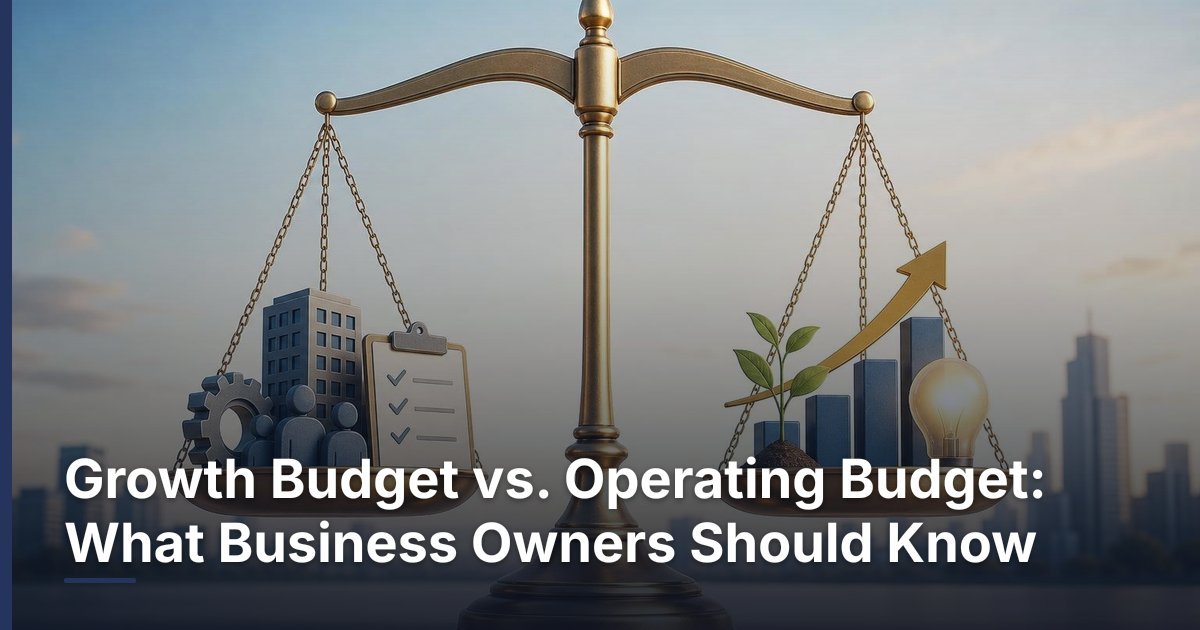
An operating budget focuses on the resources needed to run the business day to day. A growth budget focuses on planned spending intended to support a change in the business, such as entering a new market, adding capacity, launching an offering, or investing in systems. Keeping these purposes distinct can help business owners see whether regular operations are sustainable while also assessing the resources required for planned initiatives.
What an operating budget commonly covers
Operating budgets generally organize expected ongoing income and costs for a defined planning period. Categories may include payroll, occupancy, inventory or supplies, utilities, software, marketing, insurance, professional services, and other recurring expenses relevant to the business. The useful level of detail depends on how the owner reviews performance and who is accountable for each area.
What a growth budget can include
A growth budget should connect proposed spending to a specific initiative and its timing. It may account for upfront implementation costs, additional staff or contractor support, training, equipment, launch marketing, working-capital needs, and ongoing costs that could continue after the initiative begins. Separating one-time items from recurring items makes it easier to understand how a growth plan may affect later operating periods.
Compare the impact before committing resources
A growth initiative can place pressure on normal operations before it produces the expected results. Review the operating budget and the growth budget together to identify when cash outflows may occur, which operating costs could change, what assumptions are being used, and what decisions can be delayed or adjusted if conditions change. Budget categories and accounting treatment can vary, so business owners should confirm how material items should be recorded with an appropriate financial professional.
Build a practical review cycle
Budgets are planning tools rather than fixed predictions. Compare actual results with the operating plan on a regular schedule, and review each active growth initiative against its scope, costs, timeline, and operational effects. When assumptions change, update the forecast and document the decision so that future planning starts from a clearer baseline.
Use the budgets to support better conversations
A clear separation between operating needs and growth plans can make discussions with internal leaders, advisers, and financing contacts more focused. Bring the current operating view, the proposed initiative, the assumptions behind it, and the questions that still need answers. Contact A&W Financier to discuss your needs.
PUT IT INTO PRACTICE
Your next steps
- List recurring operating income and expense categories for the planning period.
- Define each growth initiative, its owner, timing, and expected resource needs.
- Separate one-time initiative costs from costs likely to continue in operations.
- Review cash-flow timing and key assumptions before committing resources.
- Compare actual results with the plan and revise the forecast when conditions change.
CONTINUE THE CONVERSATION